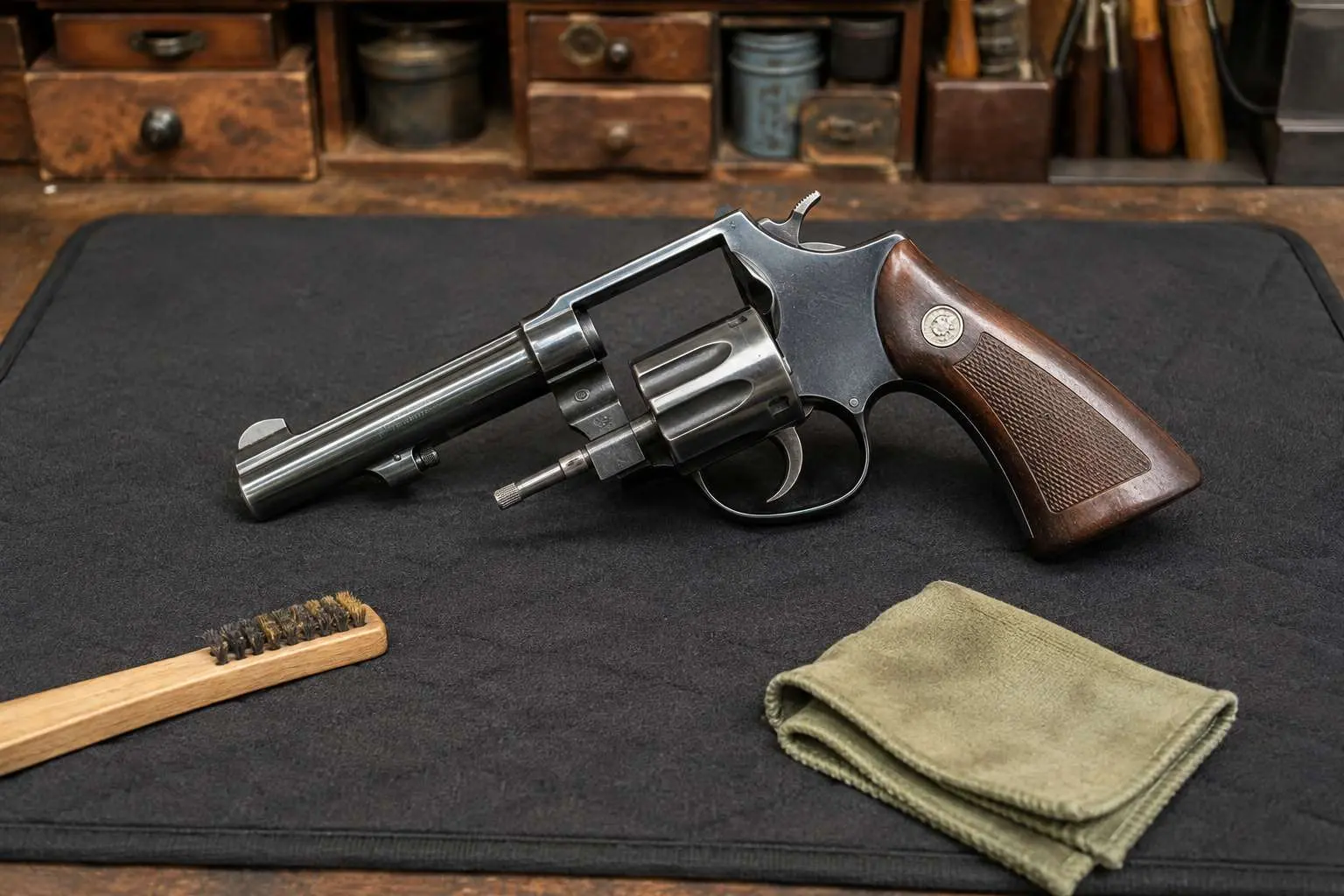
The overlooked preparation detail is not a solvent, brush or light. It is the work surface. Before an older firearm is handled for inspection clear the bench of ammunition choose lighting and make sure no one will interrupt the process. The familiar claim is that an old firearm is either unsafe by definition or trustworthy because it has survived for decades. The surviving record supports neither conclusion.
Original manuals, markings, repair notes and documented chain of custody can explain what an object was made to do. They cannot prove that its current condition is sound. Age is evidence of history, not a substitute for examination.
Start with identity not assumptions
Record the maker, model, serial or assembly markings where visible proof marks and any unusual alterations before cleaning away surface dirt. Photograph the firearm as found. Those details may help establish its ammunition original configuration and whether later parts or modifications deserve closer scrutiny.
Do not rely on a cartridge that appears to fit. Older firearms may have looking chamberings, obsolete designations or markings that are difficult to read. If the caliber, chambering or configuration is uncertain stop there. Obtain qualified identification. A knowledgeable gunsmith or appropriate reference source is safer than trial and error.
Historical context helps,. It has limits. A military acceptance mark, commercial catalog description or family story may explain provenance without telling you whether the barrel, locking surfaces or internal parts remain serviceable.
Separate dirt from damage
Surface grime and dried oil can conceal cracks, pitting, loose hardware and repairs. Begin with an inspection while the firearm remains unloaded and pointed in a safe direction. Follow the makers instructions when they are available and do not disassemble beyond what you can return to its proper condition.
Look for cracked wood around the action and wrist bulges or dents in the barrel corrosion, damaged screw heads, missing fasteners and signs of amateur alteration. Pay attention to areas that carry stress: the breech or locking surfaces, barrel attachment, hinge or takedown points and the condition of pins and retaining parts.
A clean exterior does not make a damaged firearm safe.. Does honest wear automatically make it unserviceable. The decision depends on the part, the severity of the defect and how that defect affects containment, alignment or control.
Treat the bore as a separate question
Bore inspection deserves its decision point because exterior appearance can be misleading. Use a suitable light source and inspect from the appropriate end without placing yourself in line with the muzzle. Look for rust, deep pitting, an obstructed passage, bulges, a damaged crown or a condition that prevents the bore from being seen clearly.
Light surface oxidation may be a cleaning matter. Deep pitting, a ring-shaped depression, a visible obstruction or an uncertain barrel history is not a cleaning problem. Do not attempt to "shoot it clean ". Do not use a firing test to answer a question that a visual inspection has left unresolved.
The bore also needs to be assessed in relation to the ammunition and the firearms documented chambering. If either point is uncertain the firearm should remain out of service until a qualified professional has examined it.
Clean conservatively and preserve evidence
Maintenance should remove residue without erasing useful history or introducing new damage. Use materials intended for firearms apply them sparingly. Keep cleaning products away from finishes, old wood, markings and areas where trapped liquid could promote corrosion. Abrasive polishing can remove finish and blur proof marks turning a maintenance job into an alteration.
Avoid treating every patch as rust that must be stripped. Some discoloration is finish wear; some is active corrosion; some may be evidence of a past repair. A soft cloth and careful observation are often more appropriate than polishing. On historically significant pieces preservation may matter more than making every surface look bright.
After cleaning wipe away oil. Oil is not a repair and more is not better. Residue can migrate into wood attract dust or collect in places where it complicates inspection.
Know when a gunsmith should take over
A professional evaluation is warranted when there is a chambering, a questionable repair, a cracked or bulged barrel, significant pitting, loose or damaged locking parts, a broken safety component or any doubt about whether the firearm can safely contain pressure. It is also the choice when the inspection requires disassembly beyond the owners knowledge or the makers documented instructions.
Do not attempt to correct a safety problem by filing, bending, grinding, substituting parts or changing a spring without the expertise. A part that appears simple may control timing, lockup or resistance to movement. Functional appearance is not proof of operation.
A basic inspection record can keep decisions clear:
– Identify the firearm. Photograph its condition before work.
– Confirm the chambering from documentation, not appearance alone.
– Check the bore for obstruction, bulges, heavy corrosion and visibility.
– Inspect the barrel, action, stock, fasteners and safety components.
– Record anything and keep the firearm out of service until evaluated.
Any legal requirements concerning possession, transport, storage, transfer or work may change by jurisdiction and over time. Consult official guidance rather than relying on an old manual, family advice or a forum post.
What survives the myth audit
The exaggerated claims fall away cleanly. An older firearm is not automatically unsafe because it is old and it is not automatically safe because it has a documented past or a clean exterior. Records establish context; inspection establishes condition; qualified repair addresses defects.
What remains true is more useful: ammunition from the work area confirm identity before handling questions of function inspect the bore and stress-bearing parts, clean, without destroying evidence and stop when uncertainty reaches a safety-critical component. That routine respects both the object and the person who may eventually handle it.